Shoes for Autistic Kids: A Guide to Sensory Friendly Shoes
Many autistic children, and many adults, find shoes hard. Seams that scratch, a tight collar, laces that press on the top of the foot or the feeling of a new shoe can be enough to make getting out of the door a daily battle. This guide covers what to look for in sensory friendly shoes for autistic kids, toddlers, teens and adults, and how to make new shoes easier to accept.
This guide is general shopping advice, not medical advice. Your child’s occupational therapist or physical therapist knows their sensory needs and walking best, so ask them if you are unsure.
Why shoes can be hard with autism and sensory issues
- Texture. Rough seams, tags and stiff linings can feel painful, not just uncomfortable.
- Pressure. Some children dislike any tightness; others like a firm, snug feel. Laces that loosen and tighten during the day make it worse.
- Change. A new shoe looks, feels and smells different, and that alone can lead to refusal.
- Dressing steps. Laces are a fine motor task, and fighting a shoe on adds stress to every transition.
- Toe walking. Many autistic children walk on their toes, which wears shoes in unusual places.
What to look for in sensory friendly shoes
1) Smooth, seam-free linings. Run your hand inside the shoe. You want soft, smooth linings without bumps, so the shoe can be worn with or without socks. Friendly Shoes are made with sensory friendly smooth linings.
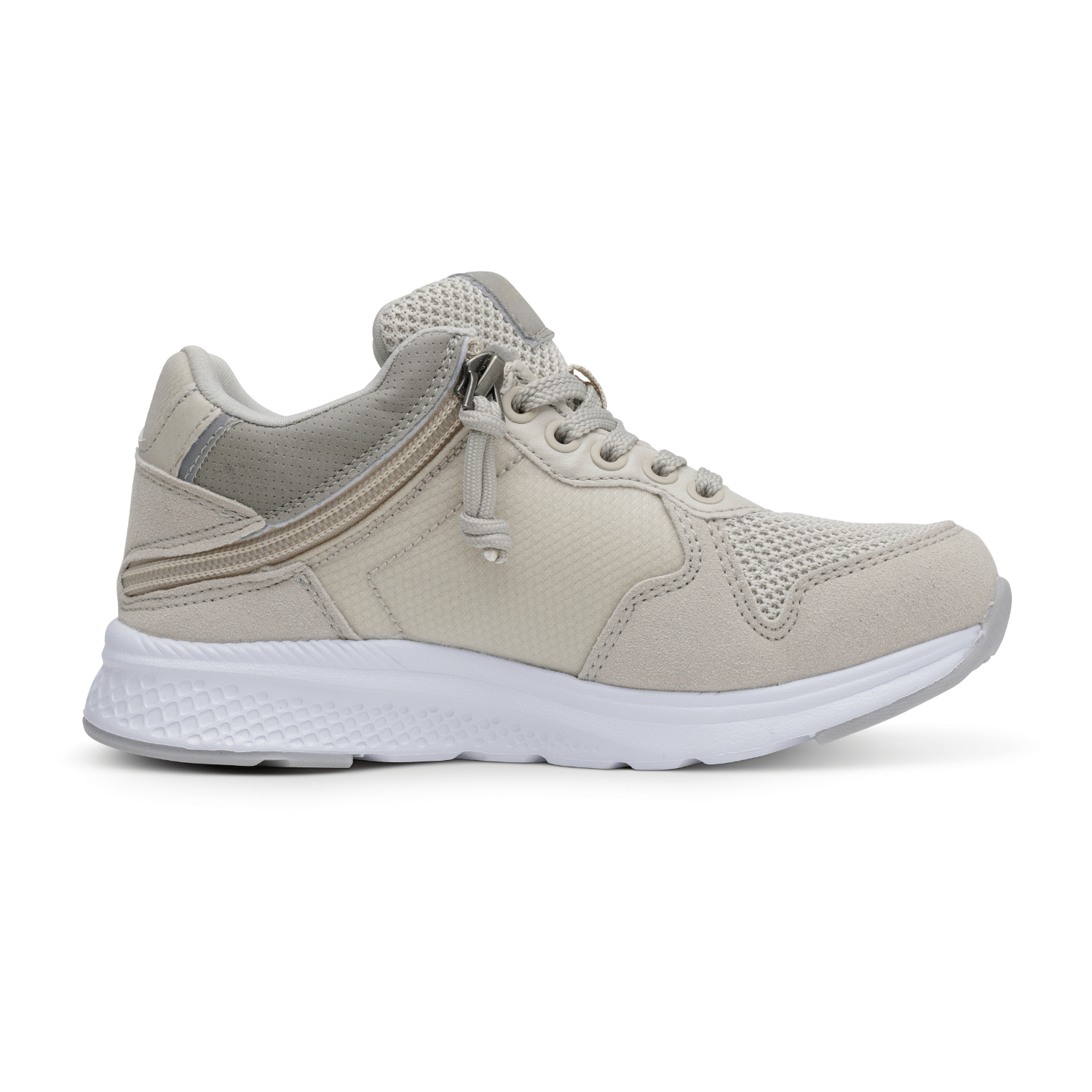
2) An opening that does not fight back. The less pushing and pulling, the better. Friendly Shoes use Easy Shoe Access, a zip opening built into the shoe that opens it wide, so the foot goes in without forcing. Many children learn to zip their own shoes, which helps with independence.
3) Set and forget fit. Laces you tie once and leave, or hook and loop (velcro) straps, keep the fit the same every day so there are no surprises.
4) Room in the toe box. A wide width and a deep toe box avoid pressure on the sides and top of the foot, and leave space for orthotics or an SMO if your child uses one.
5) Cushioned, removable footbed. A soft footbed feels better underfoot, and taking it out frees space for an insert.
6) Light weight and an anti-slip sole. A light shoe is less noticeable, and a slip resistant rubber outsole helps with steady steps on any floor.
7) A familiar look. A shoe that looks like an ordinary sneaker in a colour your child chooses is easier to accept than something that looks medical.
Sensory friendly shoes for kids and toddlers
- Excursion Moon Dust Wide Kids’ Shoe: light, wide, rear zip opening
- Excursion All Black Wide Kids’ Shoe: plain black, school friendly
- Excursion Ember Wide Kids’ Shoe: a bright colour for kids who love red
- Quest Lime Camo Kids’ Shoe: playful camo print
- Excursion All Black Wider Fit Kids’ Shoe: extra room for wider feet or braces
See all adaptive shoes for kids.
Sensory friendly shoes for autistic adults
Many autistic adults have the same sensory needs they had as children, plus the demands of work, travel and long days on their feet. What tends to help:
- Seamless, soft linings and no tags or stiff stitching at the heel and toes.
- No daily lace tying. Set the laces once to a pressure that feels right, then use a zip to get in and out, so the fit feels the same every day.
- Plain, neutral styles that work in an office or on a shop floor, so you do not have to choose between comfort and fitting in.
- A wide fit for people who dislike pressure across the sides of the foot.
- Seamless socks or socks worn inside out, which remove the toe seam many people feel.
Our women’s and men’s adaptive shoes have smooth linings, a wide fit and a zip opening, for example the Hook and Loop Black Mesh Wide Men’s Shoe and Women’s Shoe, or the Excursion Wide in plain colours like Onyx.
How to help an autistic child wear new shoes
- Let them explore first. Leave the new shoes out to look at, touch and smell for a few days before wearing them.
- Short, calm practice. Wear them at home for a few minutes at a time, during something your child enjoys.
- Keep the old pair nearby at first, and swap gradually.
- Give choice. Let your child pick the colour, or choose between two pairs.
- Use the same routine every time: same place, same order, same words.
- Measure, do not guess. A shoe that is too small or too big will be refused. Our foot sizing guide shows how to measure at home.
- Buy where you can return: Friendly Shoes can be returned within 30 days if lightly worn indoors (returns policy).
If your child refuses shoes or keeps taking them off
Shoe refusal is common, and it usually has a reason. The National Autistic Society explains that autistic people can be over or under sensitive to touch, pressure and other senses, so a shoe that feels fine to you may feel painful or overwhelming to your child. Some things to try:
- Find the trigger. Is it the sock seam, the tightness, the tongue, the noise of velcro, the moment of pushing the foot in, or the change itself? Watch which part causes distress.
- Start with socks. Seamless socks, or socks worn inside out, solve a surprising number of problems.
- Make getting in easy. A shoe that opens wide, with a zip, means no pushing or squeezing the foot in, which is often the hardest moment.
- Use a picture or a short story that shows the steps: socks on, shoes on, then the fun thing that comes next.
- Offer firm, predictable pressure if your child seeks it: some children prefer laces or straps done a little firmer, others want everything loose.
- Keep the same pair for as long as it fits, and when you change, buy the same model in the next size if you can.
- Ask for help. An occupational therapist can assess sensory needs and suggest a plan for your child.
Shoes for ADHD and other sensory processing differences
Sensory sensitivity is not only an autism trait. Some children and adults with ADHD, sensory processing differences or anxiety are just as bothered by seams, tight collars and laces. The same checklist applies: smooth linings, a wide fit, an opening that does not drag over the foot, and a closure that is quick to do so getting ready does not turn into a battle. For someone who is always on the move, a light, flexible shoe that goes on in seconds helps more than a stiff one that takes minutes to lace.
Home shoes. Many families look for something to wear indoors that is not a sock. Socks alone slip on smooth floors, and backless slippers fly off when a child runs or climbs. A soft, closed shoe with a back, a smooth lining and a grippy sole is easier to keep on and safer around the house. Keeping one familiar pair just for home also helps children who struggle with change.
Toe walking and autism
Many young children walk on their toes while learning to walk, and most stop by about age 2. The American Academy of Orthopaedic Surgeons notes that children with autism toe walk more often, though there is no direct link between the two, and that treatment, when needed, often involves stretching, casting or bracing. Shoes alone do not treat toe walking, so ask your child’s doctor or physical therapist first. If your child is given an SMO or AFO, the shoe has to fit over it: see our guide to shoes that fit over AFOs and SMOs.
Frequently asked questions
What are the best shoes for autistic kids?
Light, wide shoes with smooth linings, an easy zip or hook and loop opening, a fit that stays the same every day, and a look your child likes.
What shoes are good for autistic kids who hate shoes?
Start with the softest, smoothest lining you can find and a wide opening, so putting the shoe on never hurts or feels forced. Then introduce it slowly at home, with the old pair nearby.
How do I get my autistic child to wear shoes?
Find what bothers them first (socks, pressure, the moment of putting the shoe on, or change), then fix that one thing: seamless socks, a shoe that opens wide, a picture routine, and short practice at home. An occupational therapist can help if refusal continues.
How can I stop my autistic child taking their shoes off?
Children often take shoes off because something feels wrong. Check the fit and the socks, try a shoe without pressure points or loud velcro, and use a closure that holds the fit without being retied. Praise and a predictable routine help too.
What shoes help autistic toe walkers?
Toe walking has many causes, so ask your child’s therapist first. Some children use an SMO or AFO; in that case the shoe needs extra width and depth and a removable insole. See our guide to shoes that fit over AFOs and SMOs.
What shoes are good for kids with sensory issues?
Shoes with soft, seam-free linings, a wide toe box, a light flexible sole and a closure that does not press on the top of the foot, such as a zip or hook and loop. Let your child feel and try the shoe at home first.
What are good home shoes for ADHD?
A soft, closed shoe with a back and a grippy sole, that goes on quickly and stays on when your child runs or climbs. It is safer than socks on smooth floors and easier to keep on than a backless slipper.
Are there sensory friendly shoes for adults?
Yes. Adults with autism or sensory processing differences look for the same things: smooth linings, a wide fit, an easy opening and a light, familiar looking shoe.
What are special needs shoes?
Shoes designed to be easier to put on and to fit braces, orthotics or sensitive feet, usually with a wide opening, extra width and depth, and adjustable closures.