Shoes for Autistic Adults: Sensory Friendly Shoes for Women and Men
Many autistic adults find shoes hard to wear, and it does not stop at childhood. A seam that rubs, a tight collar, laces pressing on the top of the foot or the feel of a stiff new shoe can stay in your mind all day, at work, on a commute or in a busy shop. The right pair will not change how you experience the world, but it can take one daily source of discomfort out of it. This guide covers why shoes can be hard, what to look for in sensory friendly shoes for adults, and wide, easy to open styles for women and men.
This guide is general shopping advice, not medical advice. If foot pain, toe walking or balance problems are part of the picture, a podiatrist or occupational therapist can help.
Why shoes can be hard for autistic adults
The NHS lists sensory differences, being very sensitive or not sensitive at all to textures and other senses, as a common sign of autism in adults, along with fixed ways of doing things and distress when routines change. The National Autistic Society explains that sensory input can feel too intense for some people and too weak for others. For shoes, that often means:
- Touch. Seams, tags, rough linings and pressure points can feel painful rather than just annoying.
- Pressure. Some people hate anything tight. Others feel calmer with firm, even pressure, as long as it is the same all over.
- Change. A new pair feels different in every way, and a favourite style being replaced can be hard.
- Effort. Masking all day is tiring. Laces, small buckles and shoes that need breaking in add more effort to an already full day.
- Heat and sound. Hot, sweaty feet or a squeaking sole can be just as hard to ignore.
What to look for in shoes for autistic adults
1) Smooth, soft insides. Look for few seams near the toes and around the ankle, a soft lining and no tags. Run your hand around the inside before you buy.
2) An opening that is easy and the same every time. Hook and loop (velcro) straps or a zip mean no retying, no laces coming undone and the same fit each time. Friendly Shoes use Easy Shoe Access, a zip opening built into the shoe, so you set the laces once and never touch them again. See our guide to zipper shoes.
3) Adjustable pressure. Straps let you choose how firm the shoe feels across the top of the foot, which helps whether you like a snug, hugging fit or as little contact as possible.
4) A wide, roomy toe box. Toes that are not squeezed are less distracting, and room to wiggle helps on long days.
5) Light, breathable uppers. Mesh keeps feet cooler, which matters if heat or sweat is a trigger.
6) A cushioned, quiet sole. A soft, even sole gives a steady feel underfoot and makes less noise on hard floors.
7) A removable insole. You can swap it for one with a texture you like, or for a custom orthotic.
8) A plain, everyday look. Many adults want shoes that look like ordinary sneakers at work or in public, without drawing attention.
Sensory friendly shoes for women
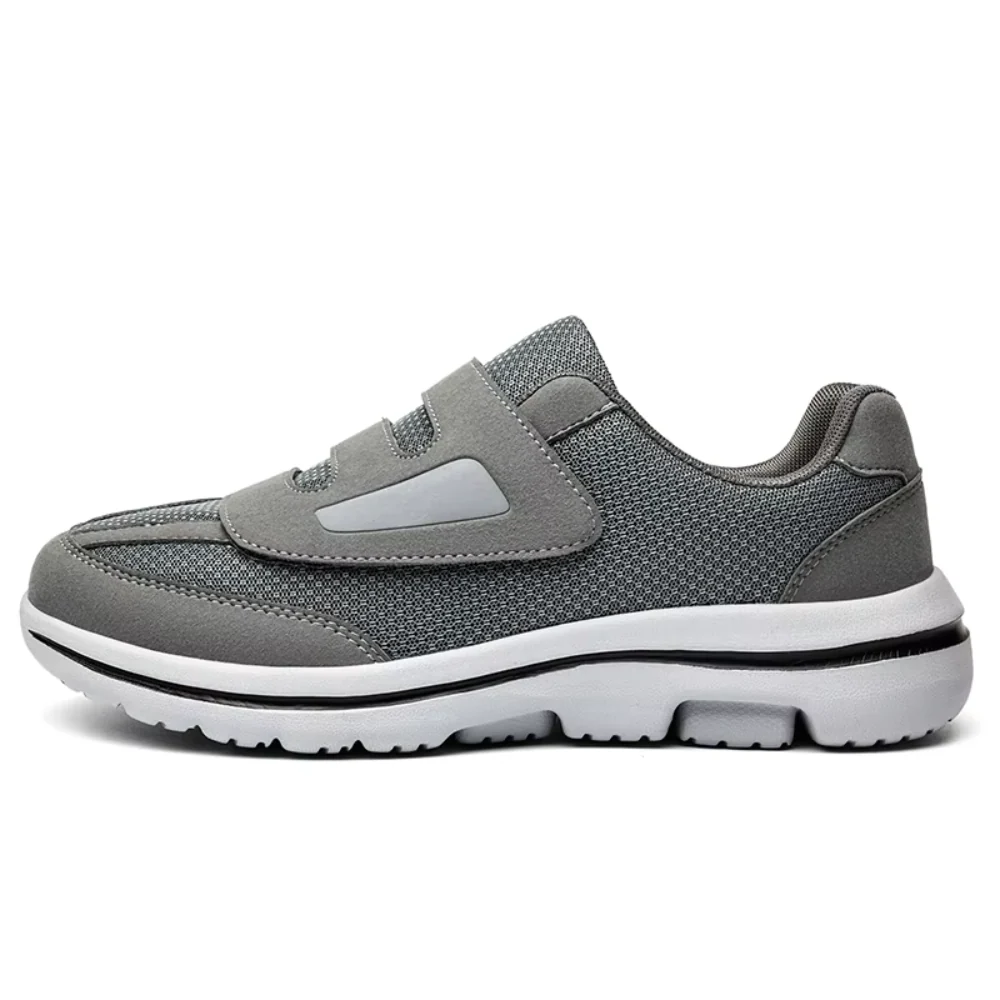
- Hook and Loop Black Mesh Wide Women’s Shoe: two adjustable straps, a generous toe box and soft, breathable mesh on a light, cushioned sole
- Hook and Loop Gray Mesh Wide Women’s Shoe and Red: the same fit in other colours
- Voyage Wider Fit Tornado Women’s Shoe: a wider fit sneaker with a front zip and removable memory foam insoles
See all adaptive shoes for women.
Sensory friendly shoes for men
- Hook and Loop Black Mesh Wide Men’s Shoe: two adjustable straps, a wide fit and a light, cushioned sole
- Hook and Loop Gray Mesh Wide Men’s Shoe: the same fit in gray
- Excursion Grey Wide Men’s Shoe: a plain wide sneaker with a rear zip. Check your size on the product page.
See all adaptive shoes for men.
Tips for buying and wearing new shoes
- Try new shoes at home first, for short times on a calm day, before wearing them out for a whole day.
- Change one thing at a time. If you like your current shoes, look for the same type of closure or sole in the new pair.
- Pick socks that work with the shoe. Seamless or flat seam socks often make more difference than the shoe itself.
- Measure in the afternoon, when feet are largest. Our foot sizing guide shows how to measure at home.
- Buy two of a pair that works if you can, so a favourite is not suddenly gone.
- Buy where you can return. Friendly Shoes can be returned within 30 days if lightly worn indoors (see our returns policy), which makes trying a new pair at home less of a risk.
Related guides
- Shoes for autistic kids
- Velcro shoes for adults and seniors
- Zipper shoes
- The complete guide to adaptive shoes
Frequently asked questions
What are the best shoes for autistic adults?
Shoes with smooth, seam free insides, an easy closure such as hook and loop straps or a zip, adjustable pressure, a wide toe box, a light breathable upper and a soft, quiet sole. The best pair is the one that feels the same every day and that you forget you are wearing.
Are there sensory friendly shoes for adults?
Yes. Adaptive shoes made for easy access often suit sensory needs too: they open wide, have fewer pressure points and avoid laces. Our hook and loop mesh shoes and zip sneakers come in women’s and men’s sizes.
Why do autistic adults find shoes uncomfortable?
Many autistic people experience touch, pressure and texture more intensely, so seams, tight collars or laces that others barely notice can be painful or distracting. Some people are the opposite and like firm pressure.
Are velcro shoes good for autistic adults?
Often, yes. Straps give the same fit every time, let you choose how firm the shoe feels and remove the effort of laces. See our guide to velcro shoes for adults.
How can I get used to new shoes?
Wear them at home for short periods first, keep the same socks, and build up slowly. Choosing a new pair that is similar to shoes you already like makes the change smaller.