Wide Shoes for Kids: Signs, Sizing and What to Look For
Some children have feet that are simply wider than the average shoe. Others need extra room for an orthotic, an SMO or AFO brace, or feet that puff up by the end of the day. Standard kids’ shoes are cut narrow and shallow, so a wide foot gets squeezed, the shoe wears out at the sides, and getting it on becomes a daily fight. This guide covers how to tell if your child needs wide shoes, how to measure, and what to look for when you shop.
This guide is general shopping advice, not medical advice. If your child has foot pain, walks differently or wears a brace, ask their doctor, podiatrist or physical therapist about fit.
Signs your child needs wide shoes
- Red marks or blisters on the sides of the foot, the little toe or the top of the foot after a day in shoes.
- The upper bulges over the sole, or the shoe wears through at the sides long before the sole is worn.
- Toes look curled or pressed together when you look down at the shoe, even though the length is right.
- Your child takes shoes off as soon as they can, complains that shoes hurt, or refuses a pair that fits on paper.
- The shoe is hard to get on and you have to push the foot in, or the tongue and laces sit tight across the top.
Some children need extra room for other reasons: an orthotic insole or brace, low muscle tone, flat feet, or a high, chubby instep. Wide feet are common in children with Down syndrome, for example. In all of these cases, the fix is the same: a shoe that is wider and deeper inside, not a longer one.
How to measure your child’s feet for width
- Measure later in the day, with your child standing and wearing the socks they usually wear.
- Measure both feet and buy for the bigger one.
- For length, leave about a thumb’s width (around 1 cm or 1/2 inch) between the longest toe and the end of the shoe.
- For width, press gently on the sides of the shoe at the widest part of the foot. The foot should not spill over the sole, and you should feel a little give.
- If your child wears an orthotic or brace, measure and try shoes with it on.
Our foot sizing tips walk through measuring at home. Children’s feet grow fast, so check the fit every few months, and sooner if your child starts taking their shoes off again.
Do not size up to get width. A shoe that is too long lets the heel slip, rubs, and makes children trip over the toe. Choose the right length in a wider shoe instead.
What to look for in wide shoes for kids
- A wide, roomy toe box so toes can spread flat.
- Extra depth over the toes and instep, so a high instep, orthotic or brace foot plate does not press on the top. See our guide to extra depth shoes.
- A removable insole that you can take out to make more room or swap for an orthotic.
- A wide opening, such as a long zip, so the foot slides in without being forced. This matters most for braces and for kids who hate putting shoes on.
- A closure that holds without retying, like a zip or hook and loop, so the shoe stays snug through the day.
- A flexible, non slip sole and a firm heel that keeps the foot in place.
- Smooth linings with few seams, for children with sensitive feet.
Our wide shoes for kids
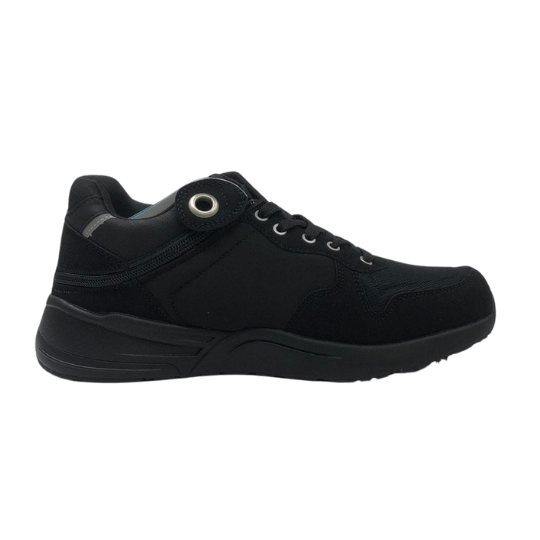
Our kids’ shoes are made for children who struggle with standard shoes. According to our product details, the Excursion All Black Wide Kids’ Shoe has a wide width upper and generous toe-box depth for wider feet, swelling and orthotics, and fits most AFOs and SMOs. A patented rear zip (Easy Shoe Access) opens a large entry, the memory foam footbed is removable, and the linings are smooth and sensory friendly.
For the widest feet there is the Excursion All Black Wider Fit Kids’ Shoe. For colder days, the Scout Desert Spice Kids’ Boot has the same rear zip, wide width and extra toe-box depth, with a removable dual-density memory foam footbed. Sizes run from little kids to big kids; see every style in our kids’ shoes shop.
If your child wears a brace, read our guides to shoes that fit over AFOs and SMOs and AFO friendly boots. For sensory needs, see shoes for autistic kids, and for low muscle tone and wide feet, shoes for Down syndrome.
Frequently asked questions
What are the best shoes for kids with wide feet?
Shoes with a wide, deep toe box, a removable insole, a wide opening such as a zip, and a closure that holds without retying. Buy the right length and get the extra room from width and depth, not from a bigger size.
How do I know if my child’s shoes are too narrow?
Look for red marks or blisters on the sides or top of the foot, an upper that bulges over the sole, toes pressed together, or a child who keeps taking the shoes off. Press the sides of the shoe at the widest part of the foot: there should be a little give.
Should I buy a bigger size for my child’s wide feet?
No. A longer shoe lets the heel slip and makes children trip. Choose the right length in a wide shoe instead.
Are wide shoes good for kids with orthotics or AFOs?
Yes. A wide, deep shoe with a removable insole and a large opening leaves room for an orthotic or brace foot plate and makes it far easier to get the shoe on. Take the shoe’s insole out before you put the orthotic in.
How often should I check my child’s shoe size?
Every few months for young children, and whenever they start complaining, limping or taking shoes off. Measure both feet each time, later in the day.