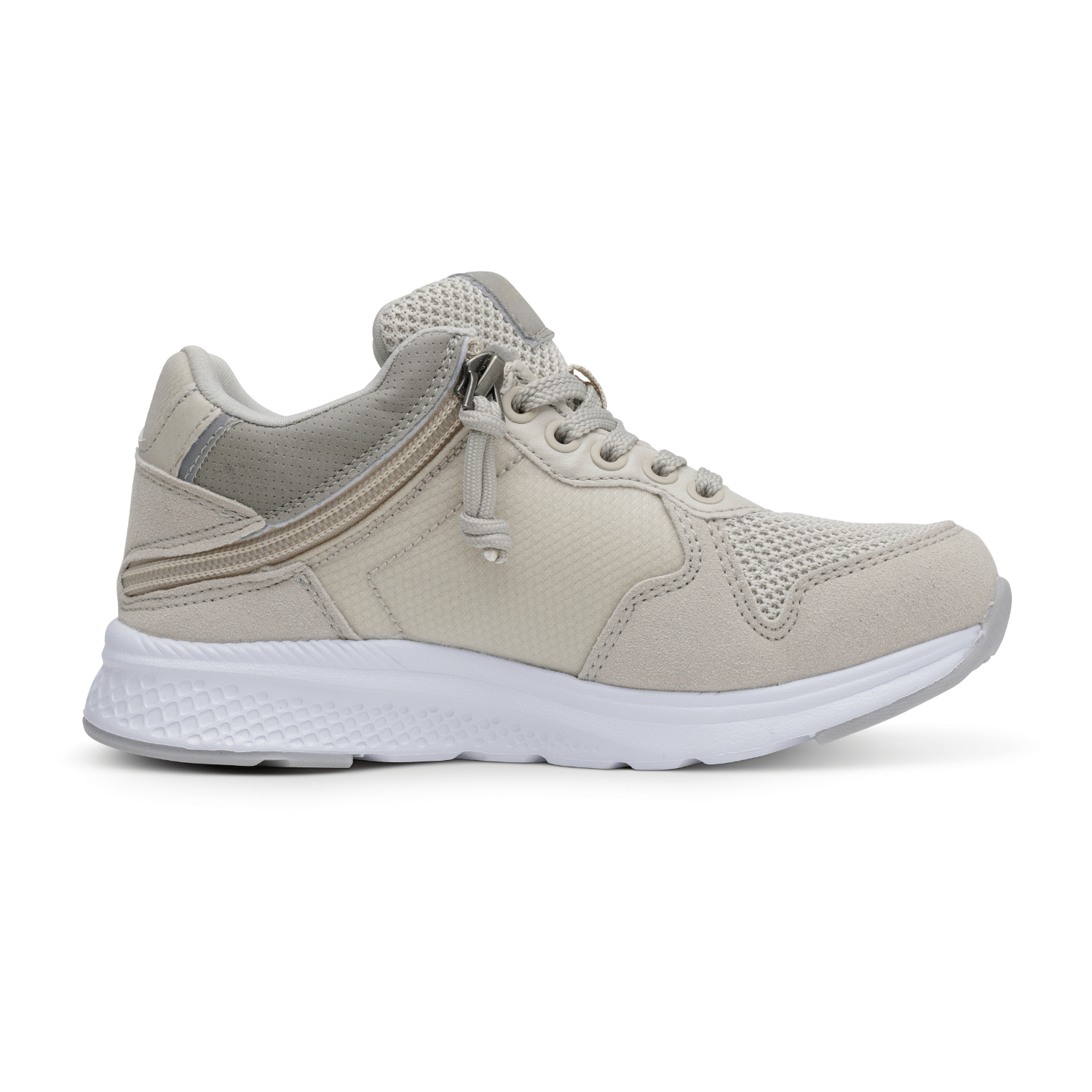
Extra Depth Shoes: What They Are and Who Needs Them
Extra depth shoes have more room inside than a standard shoe: a higher toe box and more space from the sole to the top of the foot. That extra volume makes room for custom orthotics, a brace foot plate, swelling, bunions or hammer toes, without the shoe pressing down on the top of the foot. This guide explains what extra depth means, who tends to need it, and what to check when you shop.
This guide is general shopping advice, not medical advice. If you have diabetes with nerve damage, a foot ulcer or a foot deformity, ask your doctor or podiatrist which shoe is right for you.
What is an extra depth shoe?
A standard shoe is built around an average foot with a thin insole. An extra depth shoe adds height inside the shoe, usually around the toes and over the instep, and often comes with a removable insole. Take the insole out and you gain more room for a thicker custom orthotic or a brace, while the shoe still holds the heel.
Extra depth is not the same as wide width. Width is the space from side to side; depth is the space from the sole to the top of the shoe. Many feet need both, so look for a shoe that is wide and deep, not one or the other.
Who needs extra depth shoes?
- Custom orthotics. A full length orthotic lifts the foot inside the shoe. Without extra depth, the heel slips out and the toes press on the top. See our guide to orthotic friendly shoes.
- AFO and SMO braces. The foot plate of a brace adds bulk under and around the foot. Our guide to shoes that fit over AFOs and SMOs explains how to size for a brace.
- Diabetes. With reduced feeling, a shoe that presses on the toes can cause a sore you do not notice. Extra room and smooth linings lower that risk. See our diabetic shoes guide.
- Swelling. Feet that swell during the day need room to grow without the shoe cutting in. See shoes for swollen feet.
- Bunions, hammer toes and high insteps. Toes that curl up or a foot that is tall over the instep need height in the toe box, not only width.
What to look for
- A removable insole. It is the simplest way to make space for your own orthotic.
- A high, round toe box. Your toes should move freely, with no pressure on the nails or the top of the toes.
- A wide opening. A deep shoe is easier to get on when it opens wide, with a zip or hook and loop straps, so you do not have to force the foot in. See our guide to velcro shoes for adults.
- Adjustable closure. Straps or a zip let you tighten the shoe over a thin sock in the morning and loosen it when feet swell.
- Smooth, seam free lining. Important if you have reduced feeling.
- A firm heel and a non slip sole. Extra room inside should not mean the heel slides around.
How to check the fit
Try the shoe on with the orthotic, brace or socks you will actually wear, ideally later in the day when feet are largest. Stand up and check for a thumb’s width in front of the longest toe, no pressure on the top of the toes or the instep, and a heel that stays down when you walk. Our foot sizing guide explains how to measure at home.
Our wide, deep shoes
Friendly Shoes are built with a wide width upper and generous depth in the toe box for wider feet, swelling, orthotics and many AFOs and SMOs. The Excursion and Voyage styles have removable memory foam insoles, and every style opens wide with a zip or hook and loop straps.
- Adults: the zip-open Excursion and Voyage sneakers, and the hook and loop mesh shoes for men and women.
- Kids: the Excursion All Black and the Excursion All Black Wider Fit, or browse all kids’ shoes.
Our shoes are not sold as Medicare therapeutic shoes (see below).
Does Medicare cover extra depth shoes?
In some cases. Medicare Part B covers therapeutic shoes, including one pair of extra depth shoes with inserts each year, for people who have diabetes and severe diabetes related foot disease, when the doctor treating the diabetes certifies the need and the shoes come from a qualified supplier such as a podiatrist or orthotist. If you do not meet those conditions, you buy extra depth shoes like any other shoe.
Related guides
- Orthotic friendly shoes
- Diabetic shoes guide
- Shoes for swollen feet
- Shoes that fit over AFOs and SMOs
- The complete guide to adaptive shoes
Frequently asked questions
What is the difference between extra depth and wide shoes?
Wide shoes have more room from side to side. Extra depth shoes have more room from the sole to the top of the shoe, so a thick orthotic, a brace or curled toes fit without pressure. Many people need both.
Can I put my own orthotics in extra depth shoes?
Yes, that is what they are for. Take out the shoe’s own insole first, put your orthotic in, and check the heel still sits down and the toes are not pressed.
Do I need a bigger size for extra depth?
Usually not. Buy the length that fits your foot and get the extra room from depth and width. A shoe that is too long can make you trip and lets the heel slide.
Are extra depth shoes good for diabetics?
They often are, because extra room and a smooth lining reduce pressure on feet with less feeling. People with diabetes and nerve damage should still check their feet every day and ask their podiatrist about fit.
Are extra depth shoes good with an AFO brace?
Yes. Extra depth, a removable insole and a wide opening make it much easier to fit a brace foot plate. Many people with an AFO buy the same size or a half size up in a wide, deep shoe.