Shoes for Down Syndrome: A Guide for Kids and Adults
Finding shoes that fit is one of the quieter challenges of raising a child with Down syndrome. Feet are often short, wide and flat, ankles roll in, and many children wear SMOs or insoles that a standard shoe will not take. Getting a shoe on a foot like that, every morning, is hard work for everyone. This guide covers how Down syndrome affects the feet, what to look for in shoes for kids and adults, and wide, zip open styles that make the daily routine easier.
This guide is general shopping advice, not medical advice. Your child’s physiotherapist, podiatrist or orthotist can tell you whether they need SMOs, AFOs or insoles and which shoes work with them.
How Down syndrome affects the feet
Children with Down syndrome often have low muscle tone (hypotonia) and loose, flexible ligaments. In the feet that usually shows as:
- Flat feet that roll inward (pronation), which can make legs tired and walking less steady
- Short, wide feet, often with a gap between the big toe and the second toe
- Bunions (hallux valgus) and curled smaller toes in some children and adults
A study of 50 children and teenagers with Down syndrome in the Journal of Foot and Ankle Research, reported in Lower Extremity Review, found flat feet in 76% of them, and found that ill fitting shoes, most often too narrow, were common and linked to foot problems at school and play. The researchers also noted that children may not tell their parents when shoes hurt, so regular fit checks matter.
What to look for in shoes for Down syndrome
1) A wide, deep toe box. A short, wide foot needs width across the toes and depth over the top, not a longer size. A shoe that is too long trips a child up and still squeezes the sides.
2) Room for SMOs or insoles. Many children wear supramalleolar orthoses (SMOs), short braces that hold the heel and arch. They add width and height, so the shoe needs extra room and a removable insole. See our tips for buying shoes with AFO and SMO braces.
3) A wide opening. Low tone feet are floppy and toes curl when you push them into a shoe. A zip that opens the shoe wide lets the foot and brace go straight in. Friendly Shoes use Easy Shoe Access, a zip opening built into the shoe, so you set the laces once and just zip.
4) A firm heel counter. A heel cup that does not collapse helps hold a foot that rolls inward. For children without braces, a higher top gives more ankle support than a low cut shoe.
5) A stable, flexible sole. Look for a flat, non-slip sole that bends at the ball of the foot but does not twist in the middle.
6) Light weight. Children with low tone tire quickly. A light shoe makes walking and play easier.
7) Closures your child can learn. A zip or hook and loop straps are easier for small hands than laces, which supports independence in dressing.
Shoes for kids with Down syndrome
- Excursion All Black Wide Kids’ Shoe: a wide sneaker with a rear zip that opens the back of the shoe, extra toe box depth for SMOs, smooth linings and a removable memory foam footbed, in little kid and big kid sizes
- Excursion All Black Wider Fit Kids’ Shoe: the same zip design with extra width for SMOs and wider feet
- Scout Desert Spice Kids’ Boot: a rear zip boot with a higher top for more ankle support and room for SMOs
See all adaptive shoes for kids. Our kids’ sizes start at little kid 11.
Shoes for adults with Down syndrome
Adults often keep the same wide, flat feet, and bunions become more common. The same features help, plus closures that let them dress without help:
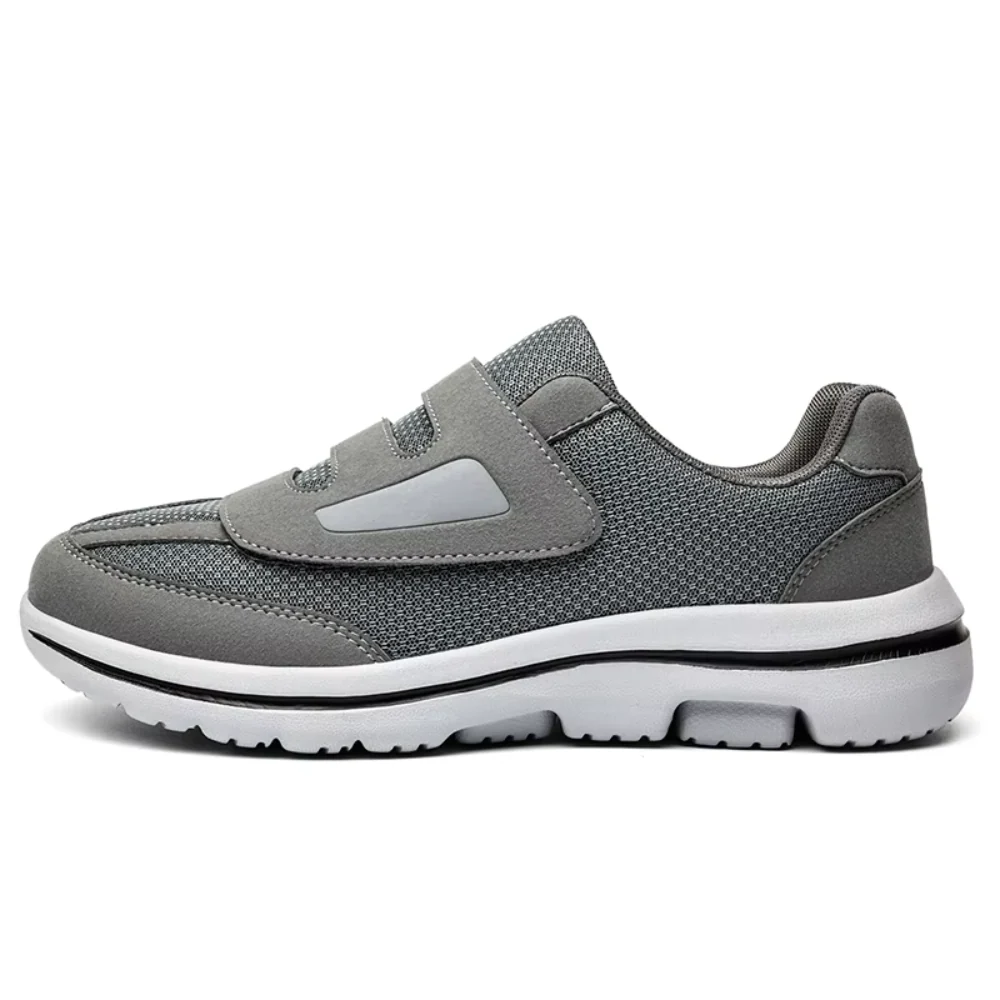
- Hook and Loop Black Mesh Wide Women’s Shoe: two adjustable straps, a generous toe box and a light, non-slip sole (also in gray and red)
- Hook and Loop Black Mesh Wide Men’s Shoe: the same fit for men (also in gray)
See our guide to velcro shoes for adults.
Fitting tips
- Measure with the SMOs or insoles on, standing up, late in the day. Our foot sizing guide shows how.
- Check width, not just length. Press the sides of the shoe: if the foot bulges over the sole or the toes are squeezed, it is too narrow.
- Check fit every few months. Children may not say when shoes hurt. Look for red marks after taking shoes off.
- If one foot needs a bigger shoe, for example because of a brace on one side, our single or split size shoe program lets you order a different size for each foot.
- Buy where you can return. Friendly Shoes can be returned within 30 days if lightly worn indoors (see our returns policy).
Related guides
- Tips for buying shoes with AFO and SMO braces
- Easy shoes for kids
- Shoes for autistic kids
- Shoes for cerebral palsy
- The complete guide to adaptive shoes
Frequently asked questions
What are the best shoes for kids with Down syndrome?
Shoes with a wide, deep toe box, room for SMOs or insoles, a wide zip or strap opening, a firm heel, a stable flexible sole and light weight. Width matters more than length: many children end up in shoes that are too narrow.
Do children with Down syndrome need special shoes?
Not always special, but often wider and deeper than standard shoes, especially if they wear SMOs. Adaptive shoes that open wide make the daily routine easier for the child and the parent.
Why do children with Down syndrome have flat feet?
Low muscle tone and loose ligaments let the arch drop and the ankle roll inward. Many children are given SMOs or insoles to support the foot while they learn to walk and run.
What shoes fit over SMOs?
Wide, deep shoes with a removable insole and an opening that goes over the brace without forcing, such as a zip or hook and loop straps. Take the SMOs with you when you measure.
What shoes are good for adults with Down syndrome?
Wide, light shoes with a roomy toe box for bunions and simple closures such as hook and loop straps, so they can put shoes on independently.