Shoes for Swollen Feet: What to Look For (Women and Men)
Swollen feet make shoe shopping hard. A pair that fits in the morning can pinch by the afternoon, laces dig in, and some days your usual shoes will not go on at all. Good shoes for swollen feet give you room, adjust as the swelling changes, and are easy to get on without forcing the foot. This guide covers what to look for, what to avoid, and a few wide, adjustable styles for women and men.
This guide is general shopping advice, not medical advice. Swelling has many causes, and some need a doctor. See the warning signs below, and talk to your doctor or podiatrist if swelling is new, keeps coming back or affects only one leg.
Why feet swell, and why it matters for shoes
Swelling in the feet and ankles is usually a build up of fluid, called oedema (edema). The NHS lists common causes such as standing or sitting in the same position for too long, salty food and some medicines, and less often problems with the kidneys, liver or heart. Pregnancy, hot weather, long flights, diabetes and getting older can all play a part too.
For shoes, three things follow:
- Your foot changes size during the day. Most people’s feet are larger in the evening than in the morning, and more so with swelling.
- Tight shoes make it worse. The NHS advice for easing swelling includes not wearing shoes or socks that are too tight.
- Swollen skin marks and rubs easily. Pressure from seams, straps or a narrow toe can leave red marks and blisters.
When swelling needs a doctor
Do not try to solve these with new shoes. The NHS says to get urgent medical advice if:
- only one foot, ankle or leg is swollen and you do not know why
- the swelling is severe, painful, getting worse or started suddenly
- the swollen area is red or hot, or you have a high temperature
- you have diabetes and your feet or ankles are swollen
Call emergency services if swelling comes with shortness of breath, chest pain or tightness, or feeling faint.
What to look for in shoes for swollen feet
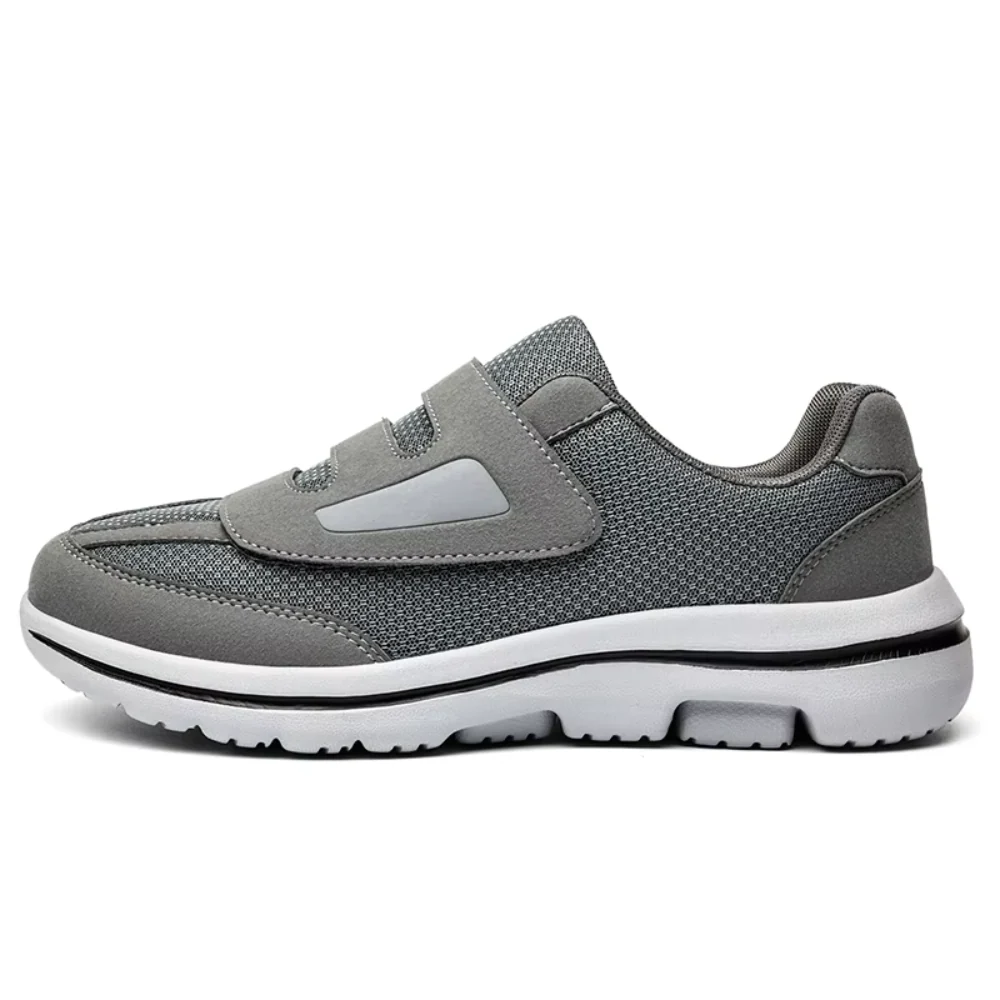
1) Adjustable closures. This matters most. Hook and loop (velcro) straps let you loosen the shoe when your feet swell and tighten it when they go down, without retying laces. A zip opening with the laces set once also makes the shoe much easier to get on over a swollen foot.
2) A wide, deep toe box. Swelling often shows across the top of the foot and around the toes. A rounded, roomy toe box and enough depth stop the shoe pressing down on the foot.
3) A wide opening. If you cannot bend easily or your foot is puffy, a shoe that opens wide lets the foot go straight in. Friendly Shoes use Easy Shoe Access, a zip opening built into the shoe, so you do not have to push the foot past a tight collar. See our guide to zipper shoes.
4) Stretchy or breathable uppers. Mesh and knit uppers give a little and let heat out, which helps on warm days when feet swell more.
5) A low heel and a soft, cushioned sole. The NHS suggests wide, comfortable shoes with a low heel and a soft sole. A low heel keeps weight off the front of the foot, and cushioning makes long days more comfortable.
6) A removable insole. Taking the insole out gives a little extra room on bad days, and makes space for a thinner insole or custom orthotic.
7) A secure heel and a grippy sole. Swollen feet can feel heavy and less steady. A shoe that holds the heel and has a slip resistant sole is safer than a loose slipper or backless mule.
What to avoid
- Pointed or narrow shoes, and anything that leaves a mark on the top of your foot
- High heels, which push the foot forward into the toe box
- Stiff leather that will not give when the foot swells
- Tight socks with elastic tops, unless your doctor has prescribed compression stockings
- Buying a much bigger size just to fit the swelling. A shoe that is too long can make you trip. Choose width and adjustability instead.
Shoes for swollen feet for women
- Hook and Loop Black Mesh Wide Women’s Shoe: two adjustable straps, a generous toe box and breathable mesh
- Hook and Loop Gray Mesh Wide Women’s Shoe: the same wide, adjustable fit in gray
- Hook and Loop Red Mesh Wide Women’s Shoe: the same fit in red
- Voyage Wider Fit Tornado Women’s Shoe: a wider fit sneaker with a front zip and removable memory foam insoles
See all adaptive shoes for women.
Shoes for swollen feet for men
- Hook and Loop Black Mesh Wide Men’s Shoe: two adjustable straps, a wide fit and a light, cushioned sole
See all adaptive shoes for men.
Tips for living with swollen feet
- Shop and measure in the afternoon, when your feet are at their largest. Our foot sizing guide shows how to measure at home.
- If one foot is bigger, our single or split size shoe program lets you order a different size for each foot.
- Raise your feet when you can, and get up and walk around if you sit for long periods. Both are on the NHS list of things that may ease swelling.
- Check your feet daily for red marks or blisters, especially if you have diabetes or reduced feeling.
- Buy where you can return. Friendly Shoes can be returned within 30 days if lightly worn indoors (see our returns policy).
Related guides
- Diabetic shoes guide
- Adaptive shoes for seniors
- Best shoes for pregnancy
- Shoes for wheelchair users
- The complete guide to adaptive shoes
Frequently asked questions
What are the best shoes for swollen feet?
Shoes with adjustable closures such as hook and loop straps or a zip, a wide and deep toe box, a wide opening, a breathable upper, a low heel, a soft cushioned sole and a removable insole. Being able to loosen the shoe as the swelling changes matters more than any single brand or style.
Should I buy a bigger shoe size for swollen feet?
Usually not a longer size. Measure late in the day and choose a wider fit and adjustable closures instead. A shoe that is too long can slip and make you trip.
Are velcro shoes good for swollen feet?
Yes. Hook and loop straps can be opened wide to get the foot in and adjusted through the day, so the shoe follows the swelling instead of squeezing it.
What shoes should I wear for swollen feet and ankles in pregnancy?
The same features help: a wide fit, adjustable straps or a zip so you do not have to bend to tie laces, and a low, cushioned sole. See our slip on shoes for pregnancy guide.
Can tight shoes cause swollen feet?
Tight shoes and socks can make swelling worse and leave painful marks, which is why the NHS advises against shoes that are too tight. They are rarely the only cause, so see a doctor if swelling does not settle.