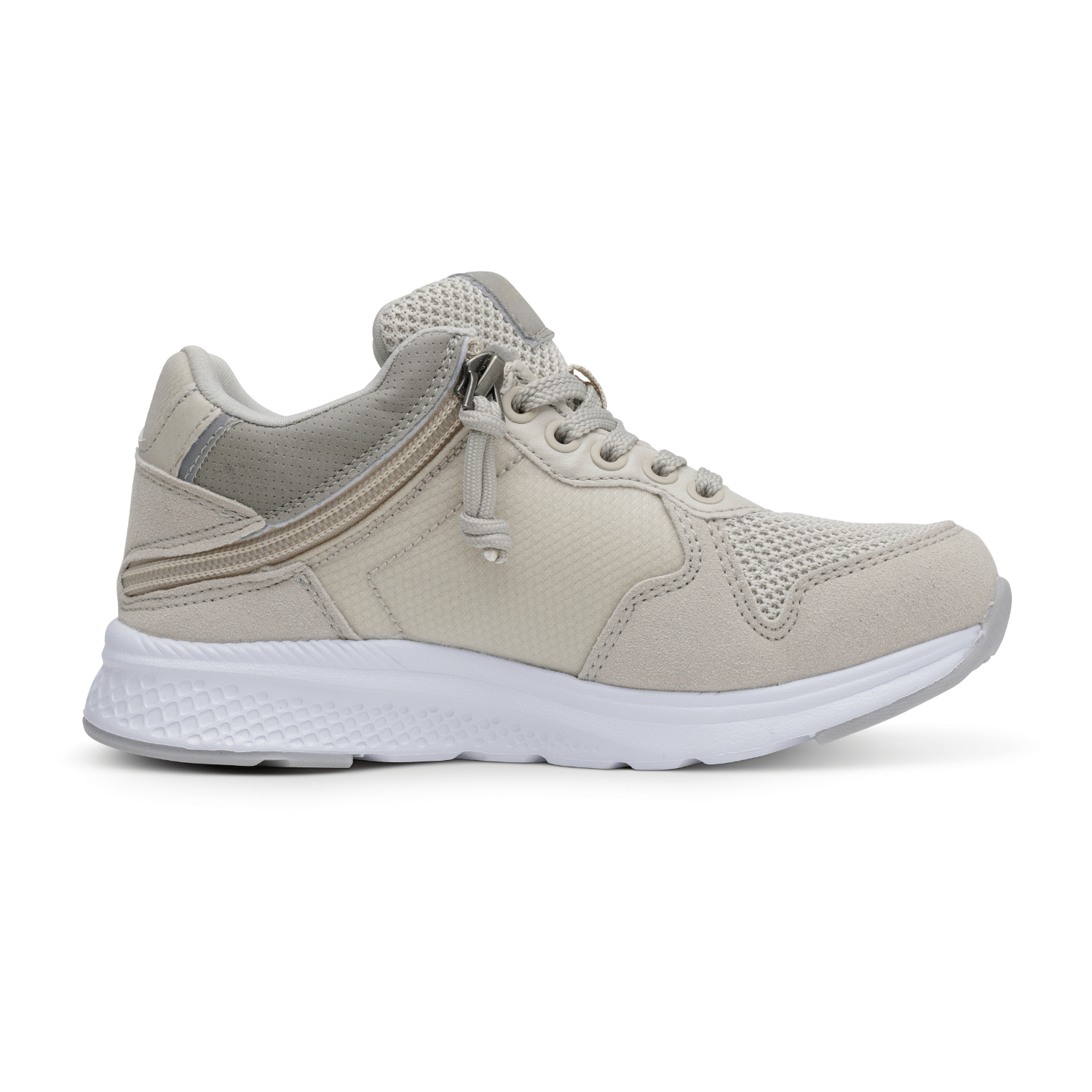
Caregiver’s Guide: Shoes That Are Easy to Put On Someone Else
If you help a parent, partner, child or client get dressed, shoes are often the hardest part. The foot will not point, the heel catches, swollen feet do not fit, or a brace has to go in too, and both of you end up bending, pulling and getting frustrated. The right shoe and a few simple habits make it much easier. This guide is for caregivers: what to look for in shoes that are easy to put on someone else, and step by step tips for doing it safely.
This guide is general shopping advice, not medical advice. If the person has wounds, reduced feeling in their feet, new or one sided swelling, or you are not sure how to move them safely, ask their doctor, nurse, podiatrist or physical or occupational therapist.
Why putting shoes on someone is so hard
- The foot does not help. After a stroke, with cerebral palsy, MS or Parkinson’s, the foot may curl, point down or push back. Our guides to shoes for stroke patients, cerebral palsy and foot drop cover this in more detail.
- Small openings. A standard sneaker opens only at the laces, so the toes have to bend and the heel has to be forced in.
- Braces and orthotics. An AFO or SMO makes the foot bigger and stiffer. See shoes for AFO and SMO braces.
- Swelling. Feet that fit in the morning can be too big by the afternoon. See shoes for swollen feet.
- Your own back. Kneeling and bending many times a day adds up for the caregiver too.
- Stress and sensory needs. For someone with dementia or autism, a long struggle with shoes can turn into distress. See shoes for dementia patients and shoes for autistic kids.
What to look for in shoes that are easy for caregivers
1) An opening that goes wide. This matters more than anything else. A zip around the heel or down the back lets the whole back of the shoe open, so you can place the foot in from above instead of pushing it in from the front. Read more in our guide to zipper shoes.
2) Closures you set once. With a zip shoe, the laces are tied once to the right fit and then left alone. Hook and loop straps are quick to open, easy to loosen for swelling, and many people can close them with one hand. See velcro shoes for adults.
3) Room inside. A wide width and a deep toe box leave space for swelling, an orthotic or a brace, and stop the toes from catching on the way in.
4) A firm heel and a pull tab. A heel that keeps its shape does not fold under as the foot goes in, and a tab or loop gives you something to hold.
5) A slip resistant, flexible sole. Once the shoes are on, the person still has to stand and walk or transfer safely. Avoid heavy, stiff or very thick soles. Our guide to adaptive shoes for seniors covers falls and grip.
6) Soft, smooth linings. Fewer seams means fewer sore spots, which matters a lot if the person cannot feel their feet or cannot tell you something hurts.
How to put shoes on someone: step by step
- Set up first. Sit the person in a sturdy chair with arms, feet flat on the floor, not on the edge of a bed. If they use a wheelchair, put the brakes on and swing the footplates out of the way. More in our guide to shoes for wheelchair users.
- Protect your back. Sit on a low stool or kneel on a cushion in front of them instead of bending from the waist. Bring the foot to you, for example resting on your knee, rather than reaching down.
- Socks and brace first. Smooth socks with no wrinkles, then the AFO or SMO if they wear one. Check that the strap is closed and nothing is folded.
- Open the shoe all the way. Undo the zip or straps fully and pull the tongue forward before the foot goes near it.
- Toes in first, then the heel. Slide the toes in, then lower the heel into the back of the shoe. A long handled shoe horn helps if the heel catches. Never push down on the toes or force a curled foot.
- Close and check. Close the zip or straps, then press at the end of the shoe: there should be about a thumb’s width in front of the longest toe. Check that the heel sits at the back and the tongue lies flat.
- Stand up slowly. Give them a moment before standing, and stay close for the first steps.
Taking shoes off is the same in reverse: open fully, ease the heel out first, then the toes. After shoes come off, have a quick look at the feet for red marks, blisters or swelling, especially with diabetes or reduced feeling (see our diabetic shoes guide).
Everyday tips that save time and stress
- Do shoes early. Feet are usually less swollen in the morning.
- Let them do what they can. Even closing a strap or pulling a zip up themselves keeps independence and confidence. A shoe they can manage alone is worth a lot.
- Keep one routine. Same chair, same order, same words. This helps a lot with dementia, autism and anxiety.
- Check the fit every few months. Feet change with age, swelling, weight and growth. Children with braces can outgrow shoes fast. Our foot sizing guide shows how to measure at home.
- Different size feet? If one foot is larger, or one foot wears a brace, see our single and split size shoe program.
- Talk to the therapist. A physical or occupational therapist can show you safe ways to move the person and suggest aids such as long shoe horns.
Friendly Shoes that are easy to put on someone else
All Friendly Shoes are made to open wide. Most styles have a patented zip around the back of the shoe, wide widths, extra depth and removable footbeds for orthotics.
- Friendly Flex hook and loop shoes open wide with straps that close with one hand: women’s black, women’s gray, women’s red and men’s black.
- Kids: the Excursion All Black Kids’ Shoe and Excursion All Black Wider Fit Kids’ Shoe have a rear zip for AFOs and SMOs.
- Browse all styles: women’s, men’s and kids’ adaptive shoes.
Sizes vary by style, so check the product page for what is available. Shipping in the US is $9.75 per item, and shoes can be returned within 30 days if lightly worn indoors (returns policy). For an overview of every condition we cover, start with our adaptive shoes guide.
FAQ
What shoes are easiest to put on someone else?
Shoes that open wide at the back or top, such as rear zip shoes or wide hook and loop shoes, are the easiest. The foot can be placed in from above instead of pushed in from the front, and the laces never need tying.
How do you put shoes on someone who cannot bend?
Sit them in a chair with arms, sit or kneel in front of them, and bring the foot up to you. Open the shoe fully, slide the toes in, then guide the heel in with a long handled shoe horn. Wide opening shoes make this much easier.
How do you put shoes on someone with stiff or curled toes?
Do not force the foot. Choose a shoe that opens wide so the toes do not have to bend to get in, put the toes in first and the heel last, and ask their therapist about stretching or positioning before dressing.
Are velcro or zip shoes better for caregivers?
Both help. A zip around the back opens the shoe the widest, which is best for braces and stiff feet. Hook and loop straps are quicker and easier to adjust for swelling. Many caregivers like a shoe that has a wide opening and an easy closure.
How do I put shoes on someone with dementia who resists?
Keep the same calm routine every day, use short simple words, let them do any step they can, and choose shoes that go on quickly so the struggle is short. Our guide to shoes for dementia patients has more tips.