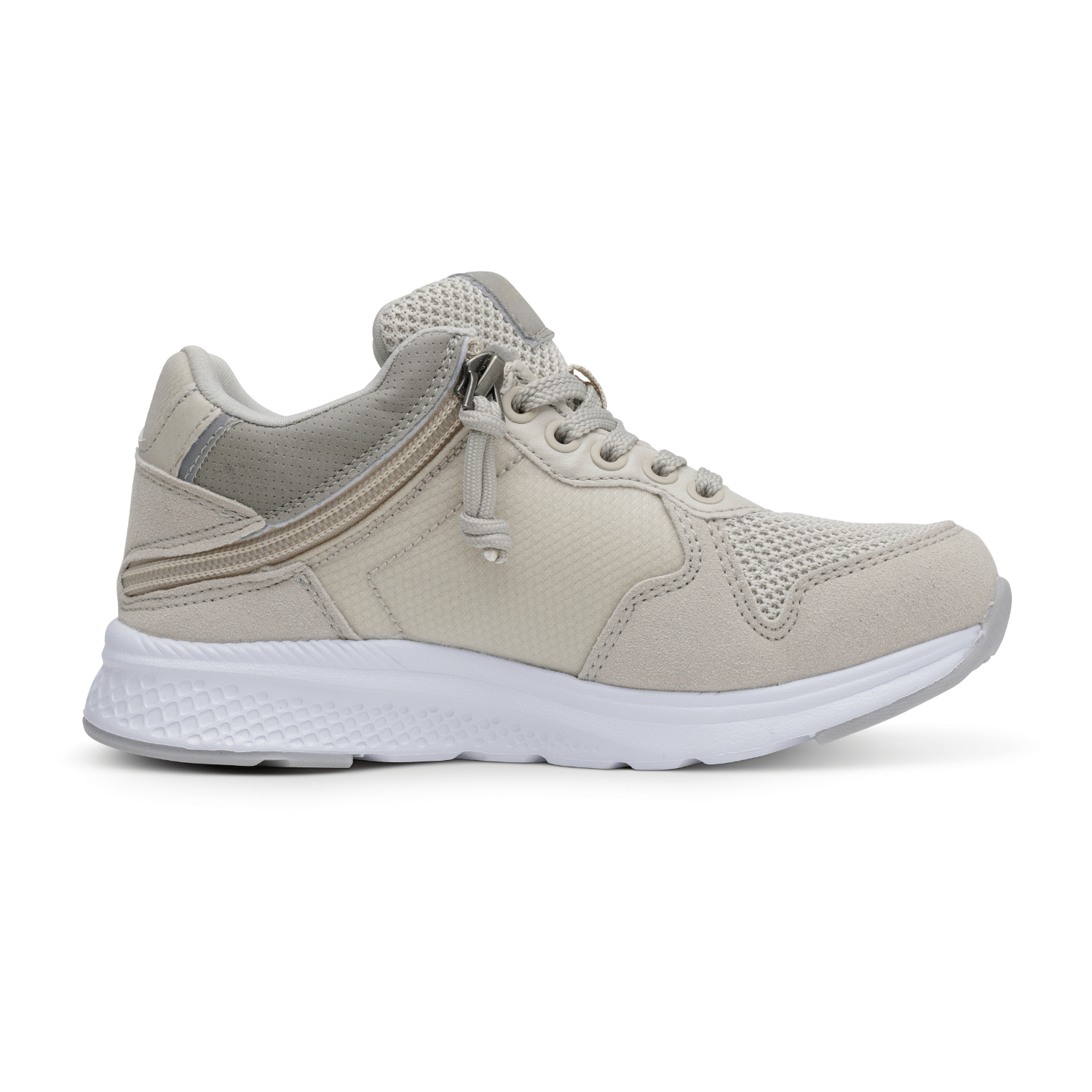
Shoes for Wheelchair Users: What to Look For
Shoes for wheelchair users have a different job from walking shoes. They rarely wear out at the sole, but they have to go on and off while seated, protect feet that may have little feeling, leave room for swelling after hours of sitting, and stay in place on the footplate. This guide covers what to look for in wheelchair shoes for adults and kids, and how caregivers can make getting shoes on easier.
This guide is general shopping advice, not medical advice. If you have reduced feeling in your feet, a pressure sore, or swelling that is new or one sided, talk to your doctor, podiatrist or physical or occupational therapist.
Why footwear matters when you use a wheelchair
- Putting shoes on while seated. Reaching the feet from a chair is hard, especially with limited trunk balance or hand strength.
- Pressure. Feet resting on a footplate for hours can get sore spots. The NHS notes that pressure ulcers usually form on bony parts of the body, such as the heels. A tight shoe or a hard seam adds to that.
- Swelling. Many people who sit for long periods have some swelling in the feet and ankles by the end of the day, so a shoe that fits in the morning can feel tight by evening.
- Reduced feeling. With a spinal cord injury, MS, spina bifida or diabetes, you may not feel a shoe rubbing until the skin is already damaged.
- Spasticity and foot position. Tone, foot drop or a brace can make it hard to get the foot into a shoe, and can push the foot off the footplate.
What to look for in shoes for wheelchair users
1) A wide opening. A zip that opens the back or the top of the shoe lets the foot go in without bending the toes or forcing the heel. This is the biggest help for dressing in a chair or with a caregiver. See our guide to zipper shoes.
2) Adjustable closures. Zips with the laces set once, or hook and loop straps, can be loosened when feet swell and closed with one hand.
3) Smooth, soft linings. Fewer seams and a soft inside mean fewer pressure points on skin that may not feel them.
4) Room for swelling and braces. A wide fit and extra depth leave space for swelling, thicker socks, an AFO or a custom orthotic. A split size pair helps when one foot wears a brace or is a different size.
5) A secure heel. The shoe should stay on when the foot is lifted onto the footplate or during transfers.
6) A light, flexible sole. You do not need a heavy walking sole. A light shoe is easier to lift and put on. If you stand for transfers or walk short distances, keep a slip resistant sole.
7) A removable insole. It makes room for a custom orthotic or a pressure relieving insole.
What to avoid
- Shoes bought too small because they “only sit on the footplate”. Tight shoes are the main cause of rubbing.
- Hard seams or stiff edges at the toes and heel.
- Backless slippers, which fall off the footplate and catch during transfers.
- Laces that must be tied every time, if you or your caregiver struggle with them.
Wheelchair shoes for adults
- Men’s Excursion Onyx Wide: patented rear zip, extra width
- Excursion Navy Wide Women’s Shoe: patented rear zip, extra width
- Men’s Voyage Shiitake and Voyage Shiitake Women’s Shoe: front zip
- AFO Friendly Hook and Loop Black Mesh Wide Men’s Shoe and the women’s version
See all men’s and women’s adaptive shoes.
Wheelchair shoes for kids
Children who use a wheelchair often wear an AFO or SMO, and they grow fast. Look for a shoe that opens wide enough to fit over the brace without a fight, and check the fit every few months. See adaptive shoes for kids and our guide to shoes for cerebral palsy.
All Friendly Shoes have removable dual density memory foam insoles and slip resistant soles. Shoes can be returned within 30 days if lightly worn indoors (returns policy).
Tips for putting shoes on from a wheelchair
- Open the shoe fully before you start: undo the zip all the way or open the straps.
- Lift one foot at a time onto a low stool or the caregiver’s knee, so you are not bending far forward.
- Use a long handled shoe horn to guide the heel in.
- Put shoes on in the morning, when feet are usually least swollen, and loosen them later in the day if they swell.
- Check that the toes are flat and the socks are smooth, with no folds.
- When shoes come off, look at both feet for red marks that do not fade, blisters or swelling.
Related guides
- Spinal cord injury: independence is possible
- MS footwear challenges
- Shoes for stroke patients
- Adaptive shoes for seniors
- Shoes that fit over AFOs and SMOs
- The complete guide to adaptive shoes
Frequently asked questions
What are the best shoes for wheelchair users?
Shoes that open wide so they go on while seated, close with a zip or hook and loop, have soft, smooth linings, leave room for swelling and braces, and hold the heel securely on the footplate.
Do wheelchair users need special shoes?
Not always, but ordinary shoes are often hard to put on from a chair and can rub feet that have little feeling. Adaptive shoes make dressing easier and reduce pressure points.
Should wheelchair users buy a bigger shoe size?
No. Buy the size that fits each foot, measured late in the day, and choose a wide fit or a wide opening for swelling. A shoe that is too long can slip off the footplate. Our foot sizing guide explains how to measure.
How can I stop shoes rubbing when I sit all day?
Choose a shoe with a smooth lining and room across the toes, wear seam free socks, loosen the closure if your feet swell, and check your feet every day for red marks.
Are zip shoes good for wheelchair users?
Yes. A zip that opens the back or top of the shoe lets the foot slide in without bending the toes, which makes dressing in a chair or with a caregiver much easier.