Foot Pain Footwear Challenges
Anatomy of the Foot: The foot is made up of 26 bones, each with its own shape, that act as connection points for the other structures of the foot. Every ligament, tendon and joint plays a part in keeping your feet healthy.
People with a moderate activity level are estimated to take about 7,500 steps a day. Over an 80-year lifetime, that adds up to more than 200 million steps.
That is why it matters to support all of these structures, especially as we get older.
Causes of Foot Pain:
Bunion:
A bump of bone or tissue around a joint, most often at the base of the big toe. It can be caused by long-term stress on the joint, arthritis and other factors.
Friendly Solution: Wear comfortable shoes that fit well. Keep an eye on the bunion, and tell a podiatrist if it changes or gets worse.
Corn:
A thick patch of hard skin on a toe, often caused by friction from a shoe or the toe next to it.
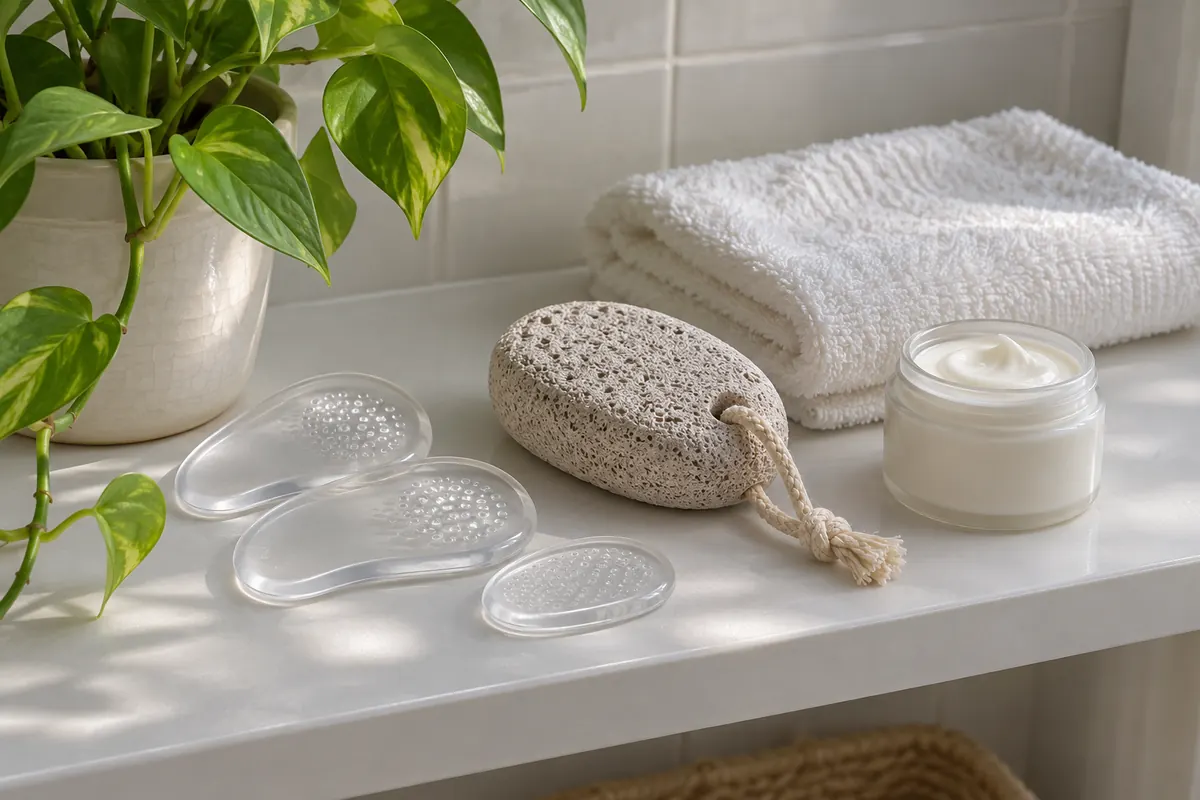
Friendly Solution: Cover the corn with a pad to cut down on friction. Shoes with a roomy toe box can reduce rubbing between the toes and against the shoe upper.

Plantar Fasciitis:
Sharp pain in the heel, often after long periods of standing or resting. It happens when the plantar fascia, the band of tissue that attaches to the heel bone, becomes inflamed.
Friendly Solution: 1) shoes with arch support 2) stretches 3) ice 4) manual treatment. If you have kept this up 2 to 3 times a day for 2 weeks and the pain is not easing, see a medical professional.
Heel Spurs:
A bony growth on the heel bone that can get worse if it is not addressed.
Friendly Solution: Wear footwear with good arch support. While it is painful, rest, stretch and use ice to help ease swelling and pain.
Hammer Toes:
A bend in the middle joint of a toe. It most often affects the second toe, but it can happen to the others too.
Friendly Solution: Avoid tight shoes with a small toe box that squeeze the middle joint of the affected toe.
Morton’s Neuroma:
A thickening of the tissue around a nerve between the long bones of the foot, most often between the third and fourth toes. Rubbing between those toes often makes it worse.
Friendly Solution: Choose shoes with a roomy toe box, so the foot has space to spread out and the inner toes rub less.
Diabetes/Vascular/Neurologic Pain:
These conditions can affect blood flow or feeling in the feet. If you have one of them, check the skin on your feet regularly.
Friendly Solution: Try different shoes and see how your feet and your pain respond. Look for a good return policy, and find a shoe company that makes the right kind of shoe for YOUR feet. If you have any of these conditions, check for red areas each time you take your shoes off.
For shoes that leave room for sore feet and orthotics, see our guides to orthotic friendly shoes, extra depth shoes and shoes for swollen feet.