Shoes for Foot Drop: What to Look For (With and Without an AFO)
Foot drop (drop foot) makes it hard to lift the front of your foot and toes. The toes catch on the ground, you may lift your knee higher than usual to clear the floor, and tripping becomes a daily worry. The right shoes will not cure foot drop, but they can make walking safer and make it much easier to wear the brace (AFO) that often treats it. This guide covers what to look for in shoes for foot drop, what to avoid, and wide, easy to open styles for women and men.
This guide is general shopping advice, not medical advice. If you find it hard to lift the front of your foot, see your doctor. Your physiotherapist or orthotist can tell you which brace and shoes suit you.
What causes foot drop
The NHS explains that the most common cause is an injury to the nerve in the leg that controls the muscles that lift the foot, for example from a slipped disc, kneeling or crossing your legs for long periods, diabetic nerve damage or hip or knee surgery. Less often it comes from a stroke, multiple sclerosis, cerebral palsy, Parkinson’s disease, muscular dystrophy or Charcot-Marie-Tooth disease. It usually affects one foot and can get better with treatment, but sometimes it is permanent.
Common treatments include physiotherapy, a brace, splint or shoe insert to hold the foot in position (usually an ankle foot orthosis, or AFO), and electrical stimulation. The NHS also notes a higher risk of tripping and falling, and advises wearing shoes that fit well and support your feet.
What to look for in shoes for foot drop
1) Room for a brace. Most people with foot drop wear an AFO at least some of the time. The shoe needs extra width and depth so the brace fits inside without pressing on the foot. Bring your AFO when you try shoes on. See our tips for buying shoes with AFO braces.
2) A wide opening. A foot in a brace cannot point its toes into a narrow shoe. A zip opening or hook and loop straps that open the whole top let the foot and brace go straight in. Friendly Shoes use Easy Shoe Access, a zip opening built into the shoe.
3) Light weight. Every step means lifting the shoe with weak muscles. A light shoe is less tiring and easier to swing through.
4) A low heel and a flat, even sole. A low heel keeps the foot level, and a smooth sole with a slight rise at the toe is less likely to catch than a chunky tread with a square edge at the front.
5) Grip without being sticky. You want a slip resistant sole, but very soft, sticky rubber can grab the floor if your toes drag. Try shoes on the kind of floor you walk on most.
6) A secure heel and fastening. The shoe must stay on when the foot drops. Avoid backless styles, and fasten straps or zips fully every time.
7) A removable insole. Taking out the insole makes room for the AFO footplate or a custom orthotic.
What to avoid
- Slippers, mules and backless shoes that can slip off or catch
- Heavy boots or shoes with thick, deep treads that snag on carpet
- High heels or a high heel to toe drop
- Narrow, shallow shoes that leave no room for a brace
- Buying a much bigger size to fit the brace. A shoe that is too long makes tripping more likely. Choose width and depth instead, and order a different size for each foot if you need to.
Shoes for foot drop for women
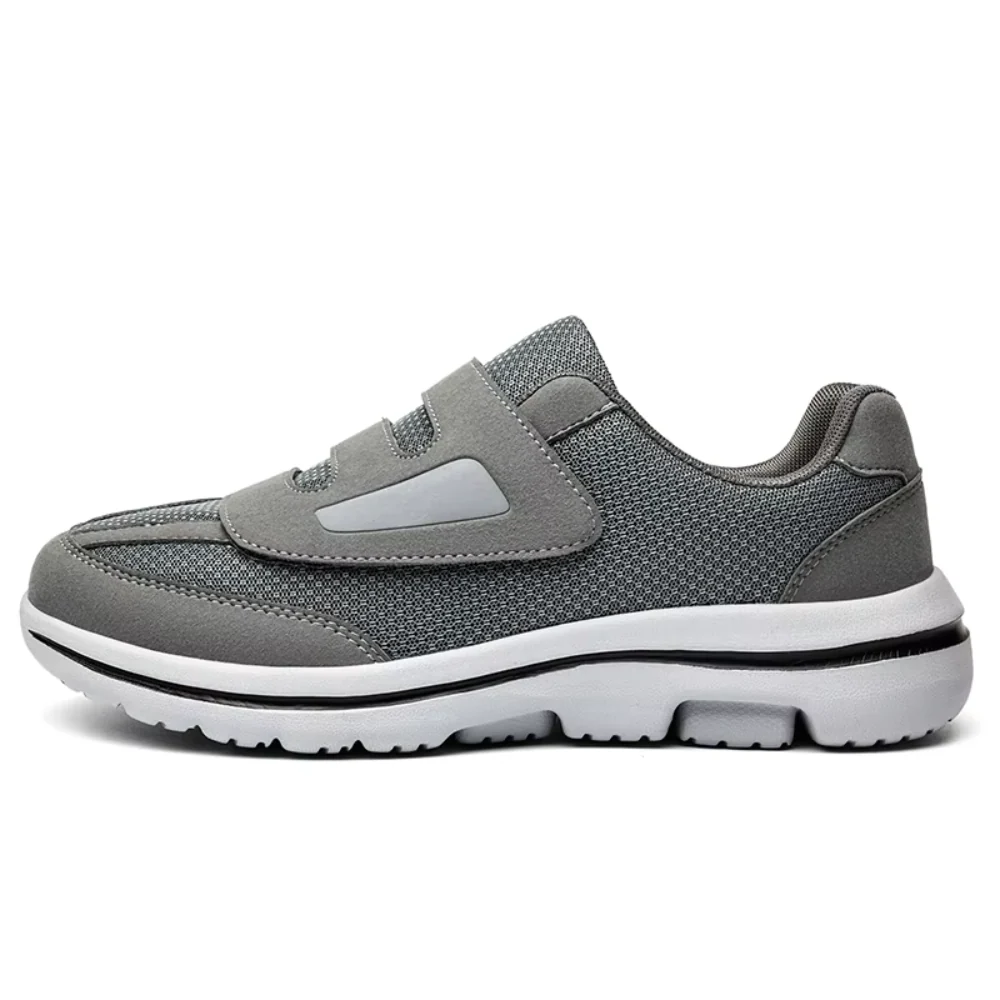
- Hook and Loop Black Mesh Wide Women’s Shoe: two adjustable straps that open wide for a brace, a generous toe box and a light, non-slip sole
- Hook and Loop Gray Mesh Wide Women’s Shoe and Red: the same fit in other colours
- Voyage Wider Fit Tornado Women’s Shoe: a wider fit sneaker with a front zip and removable memory foam insoles
- Excursion Black Silver Wide Women’s Shoe: a wide sneaker with a rear zip, so the foot goes in from behind
See all adaptive shoes for women.
Shoes for foot drop for men
- Hook and Loop Black Mesh Wide Men’s Shoe: two adjustable straps, a wide fit for a brace and a light, cushioned sole
See all adaptive shoes for men.
Tips for wearing shoes with foot drop
- Put the brace in the shoe first or on the foot first, whichever your orthotist suggests, then open the shoe fully and slide in from the heel.
- Sit down to put shoes on, and fasten them fully before you stand.
- If one foot needs a bigger shoe because of the brace, our single or split size shoe program lets you order a different size for each foot.
- Wear a thin, seamless sock under the brace to protect the skin.
- Check your foot daily for red marks from the brace or shoe, especially if you have reduced feeling.
- Keep floors clear of rugs and cables, as the NHS advises, so a dropped toe has less to catch on.
- Buy where you can return. Friendly Shoes can be returned within 30 days if lightly worn indoors (see our returns policy).
Related guides
- Tips for buying shoes with AFO and SMO braces
- Shoes for stroke patients
- MS footwear challenges
- Shoes for cerebral palsy
- Velcro shoes for adults and seniors
- The complete guide to adaptive shoes
Frequently asked questions
What are the best shoes for foot drop?
Light, wide shoes with a low heel, a smooth slip resistant sole, a secure heel and an opening that is wide enough for an AFO, such as a zip or hook and loop straps. A removable insole helps the brace fit.
Can you wear normal shoes with foot drop?
Sometimes, if they are light and secure. With an AFO, most standard shoes are too narrow and shallow, so people usually need a wider, deeper shoe that opens wide.
What shoes are best for MS foot drop?
The same features help: light weight, a low heel, a sole that does not catch, and room for an AFO. Fatigue is common with MS, so easy closures you can manage when tired matter too. See our MS footwear guide.
Do I need a bigger shoe for an AFO?
You often need a wider and deeper shoe, and sometimes half to one size bigger on the brace side. Measure with the brace on, and consider ordering a different size for each foot rather than a long pair.
Are velcro shoes good for foot drop?
Yes, for many people. Hook and loop straps open wide for a brace, adjust to the fit, and can be fastened with one hand. See our guide to velcro shoes for adults.